Saturday, August 02, 2025

Is the anaconda really as dangerous?

 · 
Follow

Anacondas especially Giant Green Anacondas are not as danger as shown in the movies.

Anacondas are reported to attack another animal when provoked, hungry and during self defence.

However there are unreported cases of Giant Green Anacondas hunting and swallowing humans. People do go mysteriously disappeared without a trace of their dead body in Amazon. Could this be the work of a giant Anaconda who's really that hungry?.

It's highly capable that a 25 to 30 foot giant Anaconda would attack and swallow humans, it does happen in extremely rare cases when the person is in the wrong place at the wrong time and if the giant serpent is extremely hungry.

Anacondas are not as aggressive compared to Pythons and venomous snakes.

Pet Anacondas are docile but are unpredictable since they're wild animals.

What are special things about Brazil?

1. Brazil is the 5th largest country in the world and is largest country in South America.

2. Brazil has the 2nd highest number of airports in the world, after the U.S.

3. The name Brazil comes from a tree named brazilwood.


4. Brazilian prisoners can reduce their sentence by 4 days for every book they read and write a report on.


5. In 1958, a rhinoceros was a candidate in the city council elections in Sao Paulo, Brazil.

6. Brazil's Capital,Brasilia, looks like an aeroplane from above.


7. Brazil once tried to sell an aircraft carrier on eBay.


8. The biggest Japanese community outside of Japan is in Brazil.


9. The 2016 Olympic Games in Rio de Janeiro, Brazil, will be the first time a South American country has the right to host them.

10. Voting is mandatory in Brazil.


11. The Bororo people of Brazil are one of the few groups of people where all have the same blood type: "O".


12. There's an Island in Brazil where civilians are forbidden to go: it has up to 5 snakes per square meter.


13. Brazil covers 3 time zones.

14. Brazil shares a border with all South American countries except for Chile and Ecuador.

Sources:
Page on factslides.com
Fun Brazil Facts for Kids

What is the most healthy drink in the world?

 · 
Follow

It's green tea.

The origin of tea is said to have been around 2700 B.C., when Shennong in China discovered it as a medicine.

At first, it was taken for medicinal purposes, but it gradually spread as a drink.

It was 5000 years ago in China.

In Suishu, Hubei Province, in the middle of the Yangtze River, a boy was born, later called Shenongen Emperor.

The child's mother, Meto, became pregnant after being touched by the spirit of the dragon god while traveling.

The boy grew up fast. He spoke at 3 days old, walked at 5 days old, and had teeth at 7 days old.

He grew to be 2m 60cm tall, strong, inquisitive and thoughtful.

Shinno, who became the leader of a hamlet called Kang, devoted himself to the lives and health of his people.

In the days when hunting and fishing were the main activities, he developed the know-how of grain cultivation.

He also invented agricultural equipment, which was the prototype of hoes and spades, to stabilize people's lives through farming.

This is the origin of the name Shinno.

He is also said to have invented torches made by bundling oily wood.

by bringing light and heat to the people, and by virtue of fire

He was also called "Entei."

They began to exchange goods on a fixed day, and they also established the prototype of markets and trade.

This is why they are called the god of business.

People in those days had stomach problems from raw water and raw food.

Even when they got sick or injured, they suffered without any way to heal.

So the Emperor Jinno Enshi went into the mountain himself and examined all the plants and trees he saw.

what is good and what is harmful,

He taught people about what could be medicine and its benefits.

The method of investigation of Shinno Entei is unique.

Crush the plants with the red whip in your hand, and try it yourself.

Surprisingly, Shinno's body was crystal clear and his internal organs were visible from the outside.

When you eat harmful grasses, your internal organs turn black, and you can tell immediately that they are poisonous.

One day, he suffers terribly from 72 poisons in one day.

He took a young leaf with white flowers and a fresh fragrance which was near him.

The leaves moved all over my belly, the poison in my body disappeared, and my condition recovered.

The leaf looked like an examination of the intestines;

The Emperor Jinno Entei called the leaves “kaku, ” meaning“ grass to be examined. ”.

It is said that it changed to "tea" without realizing it.

Since then, Emperor Jinno Entei used tea to eliminate poison and collected more medicinal herbs.

One day, however, when he took a small piece of grass with yellow flowers in his mouth, he suffered a severe pain that made his intestines twist.

That was the only time he could not eat tea in time, and his intestines were cut into pieces by the deadly poison, and he died.

Green tea in Japan is green because tea leaves are used as they are. You can get medicinal ingredients originally contained in tea.

Green tea is made by picking the new shoots of the tea tree and drying them. If you put it in hot water, it will return to the original sprouts, so you can use it for cooking.

Tea shoots are also edible. After drinking green tea, you should put the remaining tea leaves into fried rice.

And "Matcha" is more effective because it is powdered tea ground with a stone mill. They drink the tea leaves themselves.

Drinking all the tea leaves has the greatest health benefits.

Ryan Gosling

 · 
Follow

Among the rows of eager, barking dogs was one that barely moved. George—an old, scruffy soul with tired eyes and a silent presence. No wagging tail. No hopeful tricks. He wasn’t cute by shelter standards. He was just… there.

Everyone else walked past

him. But Ryan didn’t.

He saw George.

Not for what he looked like, but for who he was.

Without hesitation, he brought George home. And from that day on, they were inseparable. George became more than a companion—he became Ryan’s shadow, his constant, his quiet reminder that love doesn’t always arrive in a perfect package.

George was there on film sets, in interviews, on long walks and red carpets. Ryan once joked on The Ellen Show, “George never thought he was a dog—he thought he was a rockstar.” Even at 17, he still had his quiet charisma.

But behind the humor was something unspoken… something sacred.

George wasn’t just a dog. He was family.

Ryan wore his tag on a chain, printed his face on t-shirts, and spoke about him the way you talk about someone who’s changed you. Because George had. He’d given Ryan a kind of love that asks for nothing—and gives everything.

When George passed away, Ryan didn’t just mourn a pet. He grieved the loss of a true friend, a presence that had silently shaped his heart.

But the story didn’t end there.

One day, driving with Eva Mendes, Ryan saw a dog darting through traffic. No cameras. No fans. Just instinct. He turned the car around, got out, and saved the dog.

No applause. Just compassion.

Over the years, Ryan has spoken out against animal cruelty, supported adoptions, and quietly stood for the voiceless—not for praise, but because he knows the truth:

Sometimes, it’s the ones the world forgets who love us the most.

George wasn’t a one-time miracle. He was proof of something bigger. Of the thousands of dogs still waiting behind cold steel bars, hoping someone will stop… and see them.

Because sometimes, all it takes is a moment—a glance, a decision, a soft place in your heart—to change a life.

And sometimes… they change yours right back.

"Don’t shop. Adopt. Because they’re not just looking for a home.

They’re waiting to teach you how to love."

https://www.facebook.com/share/p/1FYZ7g1Vdw/

Overcoming Regret

August 2, 2025
Saturday of the Seventeenth Week in Ordinary Time
Readings for Today
Saint Eusebius of Vercelli, Bishop—Optional Memorial
Saint Peter Julian Eymard, Priest—Optional Memorial

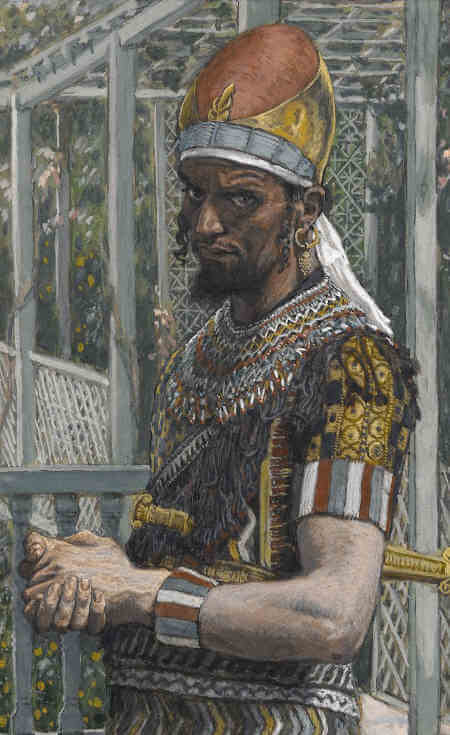
James Tissot, Public domain, via Wikimedia Commons

Video

Herod the tetrarch heard of the reputation of Jesus and said to his servants, “This man is John the Baptist. He has been raised from the dead; that is why mighty powers are at work in him.” Matthew 14:1–2

Herod the tetrarch was one of three brothers and a sister who became 1st-century rulers to succeed their father, Herod the Great, when he died in 4 B.C. Herod governed much of the territory west of the Sea of Galilee, which was the territory in which Jesus spent most of His time during His public ministry. He also ruled a territory just east of the Dead Sea, which is where he had imprisoned and ultimately killed John the Baptist. Herod was known for being a very busy builder and is prominently known for his role in the deaths of Saint John the Baptist and Jesus.

Recall that Herod had taken his brother’s wife, Herodias, as his own, and John the Baptist publicly opposed this. For that reason, Herod had John arrested and ultimately beheaded at the request of Herodias, who took the Baptist’s criticism very personally. Herod, on the other hand, had a strange sort of admiration for the Baptist.

The Gospel passage quoted above reveals a somewhat unusual statement by Herod. After he had killed Saint John the Baptist, he heard about the reputation of Jesus Who was traveling throughout Herod’s territory preaching and performing many mighty deeds. Word spread fast about Jesus and quickly reached even the ears of Herod. So why did Herod strangely think that Jesus must have been John the Baptist raised from the dead? Though we do not know for certain, we certainly can speculate.

In the version of this story found in the Gospel of Mark, we read, “Herod feared John, knowing him to be a righteous and holy man, and kept him in custody. When he heard him speak he was very much perplexed, yet he liked to listen to him” (Mark 6:20). Herod may have been a man who had a spark of faith but was ultimately ruled by his passions and desire for power. Perhaps that is why he initially kept John the Baptist alive in his prison. It also appears that Herod had some form of either regret or fear over his beheading of John. And it is most likely for this reason that Herod immediately thought of John when he initially heard of Jesus and the “mighty powers” that were at work within Him.

Regret, fear and guilt are common effects of a conscience that is in conflict. Herod the tetrarch is a good example of what happens when we do not resolve that conflict within ourselves. The only way to resolve the interior confusion of a conflicted conscience is to humbly submit to the truth. Imagine if Herod would have repented. Imagine if he would have sought out Jesus, confessed his sins, and begged for forgiveness. What a glorious story that would have been. Instead, we have the witness of a man who has gone astray and remained obstinate in his sin.

Reflect, today, upon this unholy witness of Herod. God can use all things for His glory, and He can even use the example of Herod to reveal to ourselves any similar tendency. Do you struggle with regret, fear and guilt? Does this cause conflict within you? The good news is that this conflict is easily resolved by a humble heart that seeks the truth. Seek the truth by admitting any long-lasting sin you need to resolve and permit the mercy of God to enter in so as to set you free.

My merciful Jesus, You desire that all people experience freedom from the sins of the past. You desire to penetrate our hearts and to bring resolution and peace. Please help me to open my mind and heart to You in the areas that still cause pain and regret, and help me to be set free by Your infinite mercy. Jesus, I trust in You.

Friday, August 01, 2025

Seeing the Greatness of Christ

August 1, 2025
Memorial of Saint Alphonsus Liguori, Bishop and Doctor of the Church
Readings for Today
Readings for Friday of the Seventeenth Week in Ordinary Time

See page for author, CC BY 4.0, via Wikimedia Commons

Video

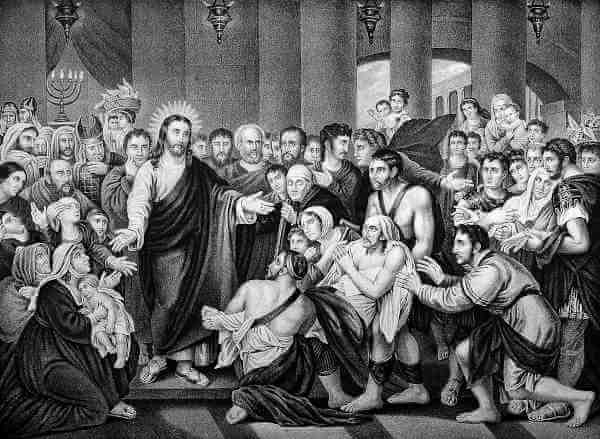
Jesus came to his native place and taught the people in their synagogue. They were astonished and said, “Where did this man get such wisdom and mighty deeds?” Matthew 13:54

Today’s Gospel goes on to say that the people in Jesus’ hometown of Nazareth took offense at Him, which led Jesus to say, “A prophet is not without honor except in his native place and in his own house.” It is somewhat surprising that they took offense at Jesus after witnessing His wisdom and mighty deeds. Jesus was very familiar to the townspeople, and it seems that that familiarity led them to doubt that Jesus was someone special.

It should be noted that, in many ways, the people who knew Jesus for many years should have been the first people to see His greatness. And most likely there were some from His hometown who did. They would have known Jesus' mother, the Blessed Virgin Mary, and she would have given daily witness to incredible virtues. They would have known Joseph as a truly righteous and just man. And Jesus would have exuded every human virtue to perfection as He grew. And again, that should have been easily noticeable. But many failed to see the holiness of Jesus and the Holy Family.

This experience of our Lord should remind us that it is easy to miss the presence of God all around us. If those who were closest to Jesus did not recognize Him as a man of exceptional virtue and holiness, then how much more might we fail to see the presence of God in the lives of those we encounter every day? For some reason, perhaps because of our struggles with pride and anger, it is easier to look at the faults of another than at their virtues. It’s easy to be critical of them and to dwell upon their perceived weaknesses and sins. But this Gospel story should encourage us to do all we can to look beyond the surface and to see God present in every life we encounter.

On the most fundamental level, God dwells within each and every person He has created. Even those who remain in a state of persistent mortal sin are still made in the image of God and reflect God by their very nature. And we must see this. And those who are in a state of grace carry the presence of God, not only within themselves by nature but also through God’s action in their lives. Every virtue that every person has is there because God is at work in them. And we must work to see this divine activity in their lives.

Begin by thinking about the people with whom you are closest. When you think about them, what comes to mind? Over the years, we can build habits of dwelling upon others’ faults. And those habits are hard to break. But they can only be broken by intentionally seeking out the presence of God in their lives. As noted, if Jesus’ own townspeople had a difficult time doing this with Him Who was perfect, then this should tell us that it will be even harder for us to do with those who lack perfection. But it must be done and is a very holy endeavor.

Reflect, today, upon the important mission you have been given to see the presence of God in the lives of those all around you. What if Jesus had grown up in your town? As your neighbor? And though the Incarnate Son of God does not live next door as He did in Nazareth, He does live in each and every person you encounter every day. Honestly reflect upon how well you see Him and commit yourself to the holy mission of seeing Him more clearly so that you can rejoice in His greatness which is truly manifest all around you.

My Lord of true greatness, You are truly present all around me. You are alive and living in the lives of those whom I encounter every day. Please give me the eyes of faith to see You and a heart that loves You. Help me to overlook the faults and weaknesses of others. Jesus, I trust in You.