Saturday, June 28, 2025

LETTER

 June 28

i woke up this morning with a good and positive feeling to do things wonderful to everyone around me, most particularly like seeing myself being and beside Sara at a distance to wait her wake up. I want to see her feel happy with a smile on her face regardless of the pain and trouble she must have gone through in her sleep.
I imagine all the anxieties and problems that burden her ever since. I try to think what to do to make her day happier and brighter.

At this instant, I'm thinking how to share my thought to everybody around me so that I could make a more positive and happier instant to get through with each other every moment. I wonder if ever I could convince her to go on a trip away from the nursing home for a few days in order to change her mind. 

Unfortunately, the consultation with the psychiatrist at the St. Pierre clinic the other day didn't satisfy her at all. I could only agree with Elizabeth, the lady who always accompanied her, that she needs a change. 

Yesterday, I was very surprised why she sent me home earlier. But I think she wasn't in a good mood that she she changed all by herself in order to go to sleep, in the middle of the afternoon. So, I left at 3 pm and told her that I'd be back tomorrow. 


Touched by Grace

June 28, 2025
Saturday of the Twelfth Week in Ordinary Time
Readings for Today

Saint Irenaeus, Bishop and Martyr

Immaculate Heart of Mary
Saturday following the second Sunday after Pentecost

John Bridges, Public domain, via Wikimedia Commons

Video

Jesus entered the house of Peter, and saw his mother-in-law lying in bed with a fever. He touched her hand, the fever left her, and she rose and waited on him. Matthew 8:14–15

How do we properly respond to the action of God in our lives? In the passage above, we are given the witness of Peter’s mother-in-law to answer that question. It should be noted that Jesus was on a continual mission of healing. In fact, before arriving at the house of Peter, Jesus had just healed a centurion’s servant. When the centurion came to Jesus stating that he was not even worthy to have Him enter his house, Jesus saw the centurion’s faith and healed his servant from a distance. After arriving at the house of Peter, we are told that many people brought to Jesus those who were possessed by demons, and Jesus healed them all. But between the healing of the servant and the healings of the many, another healing occurred. The response to this healing sets for us a wonderful example.

Peter’s mother-in-law was ill and in bed with a fever. It’s unclear just how ill she was, but the fact remains that she was ill to the point of being in bed. Notice, first, that Jesus was not even asked to heal her. Rather, He “saw” her ill and in bed, approached her of His own choosing, “touched her hand,” and she was healed.

Within the same sentence describing Jesus’ healing, we are told that “she rose and waited on him.” First of all, “she rose.” This should be seen as a symbolic depiction of what we must do when we are touched by grace. The grace of God, when it is given to us, must have the effect of causing us to rise. We rise from sin when we confess that sin and receive forgiveness, especially in the Sacrament of Reconciliation. We rise up every time God enters our lives to give us direction, clarity and hope. To rise is to be strengthened to dispel the burden that sin and confusion causes. We rise in strength, renewed and determined to go about the will of God.

After this woman rose, she “waited” on Jesus. This is the reason we rise up when touched by grace. We are not given God’s grace so that we can go back to our sin, or pursue our own ventures, or do our own will. We rise so that we can serve our Lord and His holy will. In a sense, Jesus’ actions in our lives impose upon us a holy burden. But it is a burden that is light. It’s an obligation to serve and give ourselves to our Lord to attend to Him, His holy will, and to all that He calls us to do.

Reflect, today, upon this threefold action of the Gospel. See Jesus approaching you and touching you in your prayer. Know that He comes to you not only because you pray to Him but out of His own initiative when He sees you will respond. Then consider your response. Rise from that which keeps you down. Let God’s grace free you from the burdens you carry. And as He grants you this grace, determine to wait on Him and to serve His will alone. The service of our Lord is what we are made for, and doing so will enable us to continually receive His grace through His touch of love.

My merciful Jesus, You continually come to me, approaching me to reach out and touch me with Your grace. You desire my healing and strengthening every day. Help me to be open to all that You wish to bestow and please free me from all that keeps me down. May I rise up in service of You and Your holy will so that Your Kingdom may be built up more fully through me. Jesus, I trust in You.

Friday, June 27, 2025

The Font of Mercy

Friday, June 27, 2025
Solemnity of the Most Sacred Heart of Jesus
Friday following the second Sunday after Pentecost
Readings for Today
Behold the Pierced One! by Lawrence OP, license CC BY-NC-ND 2.0.

Video

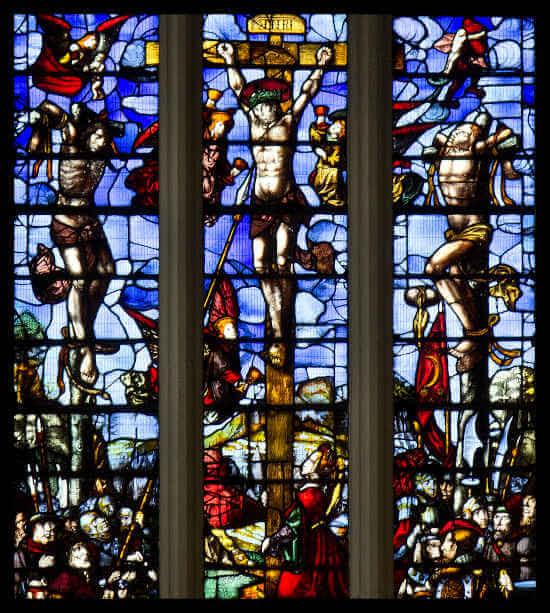
But when they came to Jesus and saw that he was already dead, they did not break his legs, but one soldier thrust his lance into his side, and immediately blood and water flowed out. John 19:33–34

John’s Gospel is filled with deep spiritual imagery and symbolism. It is clear that this imagery and symbolism was divinely inspired so as to give us spiritual food for reflection and meditation. One such image is given to us today as we celebrate the Solemnity of the Sacred Heart of Jesus.

As Jesus and the two criminals on either side of Him hung upon their crosses, the soldiers came to hasten their deaths by breaking their legs to cause them to more quickly suffocate. But when they came to Jesus, He had already died. So one of the soldiers, traditionally known as Longinus, thrust his spear into Jesus’ side, and blood and water flowed forth. Some traditions identify Longinus with the centurion who cried out after Jesus’ death, “Truly, this was the Son of God!” (See Matthew 27:54.) Other traditions state that he converted at that moment, making him the first convert to Christianity. And still other traditions state that Longinus could not see well, and the blood and water from Jesus’ side poured upon his eyes, healing him. Regardless of whether these traditions are true, we know that Jesus’ side was pierced and blood and water flowed forth.

The symbolism of this act was more than a mere human symbol. It was an instrument of the profound spiritual reality that was taking place at that moment. As Jesus’ Sacred Heart was pierced, the blood and water that poured forth was the new sacramental life of the Church. The Blood was the Most Holy Eucharist and the Water was the gift of Baptism. And when Jesus had previously “breathed His last” and “handed over His Spirit,” the Sacrament of Confirmation was bestowed.

When we celebrate those Sacraments today, it is easy to see them as mere symbols of what we partake in. But in our Christian Tradition, the Sacraments are so much more. The symbol is also the reality. It is the instrument of what it symbolizes. Therefore, every time we witness a Baptism or partake in the Holy Eucharist, we are mystically present with Longinus, receiving the grace and mercy of our redemption, pouring forth from Jesus’ wounded side, so as to heal us and make us whole.

The human heart is, physically speaking, a bodily organ responsible for pumping blood throughout. But from a spiritual perspective, given that we are both body and soul, the human heart is also the source of our life. Without it, we physically and spiritually die. So it is with the Sacred Heart of Jesus. It was not only a physical heart that was physically pierced by the lance long ago. It is now also the source of our ongoing spiritual life, and, without Jesus’ Sacred Heart of Mercy, we will die in our sins.

Reflect, today, upon the Most Sacred Heart of Jesus. See His Heart as the ongoing source of your new life in grace. Understand that His Heart is more than a symbol of His grace and mercy, it is the spiritual source and the font of that mercy. Prayerfully place yourself before His Cross, this day, and allow the blood and water, flowing from His wounded side, to cover you so that you, too, may believe.

Most Sacred Heart of Jesus, You poured out upon the world the love and mercy of Your transforming grace through the instrument of the blood and water pouring forth from Your wounded side. Help me to gaze upon this font of mercy and to be covered with it through the gift of the Sacraments. May I always be open to all that You wish to bestow upon me by these precious and transforming instruments of Your love. Sacred Heart of Jesus, have mercy on us. Jesus, I trust in You.

Thursday, June 26, 2025

An Authoritative New Law

June 26, 2025
Thursday of the Twelfth Week in Ordinary Time
Readings for Today

Image via Adobe Stock

Video

When Jesus finished these words, the crowds were astonished at his teaching, for he taught them as one having authority, and not as their scribes. Matthew 7:28–29

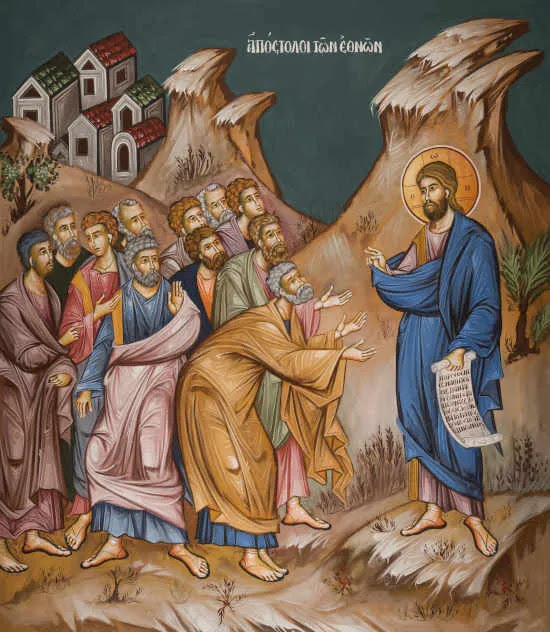
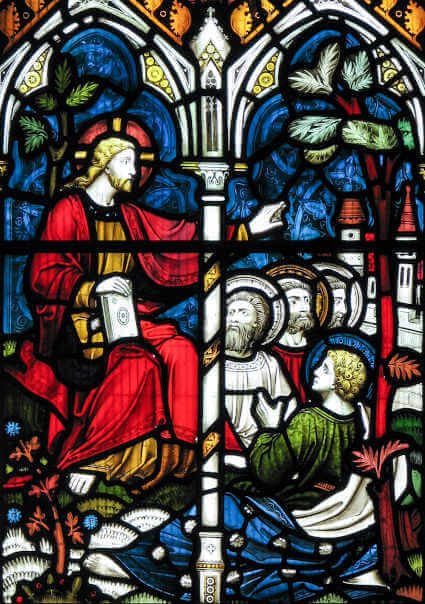
These lines conclude the Sermon on the Mount found in Matthew’s Gospel chapters 5–7. In that lengthy sermon, Jesus touches on many topics and presents us with a summary of all we need to know in our lives of faith. In these concluding lines of His sermon, the words “astonished” and “authority” should stand out. Why were the crowds astonished at Jesus’ teaching? Because His teaching was new and relied upon a new authority that the people hadn’t experienced before.

The authority with which the scribes taught was based upon their knowledge of the traditions handed down to them from earlier teachers. The scribes studied long and hard and then presented what they had learned. This was the form of religious teaching that the people were used to receiving.

Jesus, however, arrived on the scene and astonished the crowds, because He spoke with a new authority that they had not seen before. Jesus’ authority came forth from His very Person. It was not based upon what He had studied and learned from those who preceded Him. Instead, when He spoke, it was He Himself Who was not only the mouthpiece of the New Law of grace, He was also the Author of the Law and its source.

Try to ponder the idea of authority. For example, a child knows that a parent has authority over them. They may not like it at times, but they understand that they do not set the rules of the house but must abide by the rules set by their parents. Or consider the authority of civil leaders. Law enforcement officers, for example, have an authority entrusted to them by their office. They are not only well versed in the rule of law, they can also enforce it and everyone knows it.

Similarly, Jesus did not just know about the new and glorious truths He taught. He did not simply learn them from the Father in Heaven and then pass them on verbally. Instead, when He taught, He did so as the One Who knew the New Law of grace, the One from Whom it originated, and the one and only Person sent to enact and enforce this New Law.

Reflect, today, upon the New Law of grace and mercy taught by our Lord, especially as it is contained in the lengthy Sermon on the Mount. Reading those words is much more than something we study and learn. The words themselves are alive; they are the Word of God. Reading them makes present to us the same authority that the crowds experienced in Jesus’ time. Everything Jesus taught was and is new, deep, profound, transforming and alive. And when He teaches it, He also establishes His divine authority to enforce it upon the world. This is good news, because His New Law is not an imposition; it is the one and only source of freedom and new life. Reflect upon this New Law of our Lord and pray that you will more fully come under its authority.

My glorious Lawgiver, You taught as One with authority. Today, as Your holy Word is read and proclaimed, You continue to exercise Your new and glorious authority of love and mercy. Please help me to listen to You and to always submit myself to Your authority so that I am governed by Your New Law of grace. Jesus, I trust in You.

Wednesday, June 25, 2025

Good Fruit—Bad Fruit

June 25, 2025
Wednesday of the Twelfth Week in Ordinary Time
Readings for Today

Jesus tells the Parable of the Barren Tree by Lawrence OP, license CC BY-NC-ND 2.0.

Video

“Do people pick grapes from thornbushes, or figs from thistles? Just so, every good tree bears good fruit, and a rotten tree bears bad fruit.” Matthew 7:16–17

“So by their fruits you will know them.” This is how our Gospel passage for today concludes. It offers us an exceptionally practical way by which you can discern the working of God in your own life and in the life of others.

When you look at your own life, what good fruit, born for the upbuilding of the Kingdom of God, do you see? Some people may find little to no fruit born, either for good or bad. Such complacency is, in and of itself, bad fruit. Other people may see an abundance of fruit, thus producing many consequences in this world. They influence the lives of many, and their public actions make a true difference. Sometimes for good...and other times for evil.

When discerning the actions of God in our world, we must first be very objective. The evil one is always very deceptive and regularly presents his bad fruit as good. For example, the legalization of abortion is often presented by many within our world as a “right to choose” or a “health service.” But the intentional death of any unborn child is clearly “bad fruit” from a “rotten tree.” There are even many so-called “humanitarian groups” or very wealthy “philanthropists” who present their work as “good fruit,” when it is anything but good. And on the contrary, there are many who work hard to bring forth a greater respect for life from the moment of conception to natural death, or strive to uphold the sacredness of marriage as God designed it, or work to promote the freedom to worship in accord with the will of God, but are labeled by the secular world as prejudiced, bigoted, fearmongers and even hateful. But their work, done very sacrificially, truly does bear good fruit for the Kingdom of God.

How about your own life? When you examine your actions and the fruit born of those actions, from where does that fruit originate? Does it come from a false sense of compassion, a misguided “charity,” and a fear of being criticized for standing for the truth? Or does it come from a deep love of God, an awareness of the truth God has revealed to us, and through a courageous proclamation of the pure Gospel?

Good fruit, born from the heart of the Father in Heaven, will always mirror the truths of our faith. A false sense of compassion, false accusations, persecutions and the like will flow from the rotten trees in our world. We must work diligently to be those good trees that bear the good fruit coming from God. This requires a radical commitment to do what is right in the face of the evil all around us.

Reflect, today, upon these images Jesus presents. Do you see clearly both the good and bad fruit around you? Is your life helping to foster the lies of the evil one or the truth and love of God? Look at the fruit your life bears, as well as the fruit within our world, in an objective way, comparing it to the clear and unambiguous teachings of Jesus. Seek out that good fruit with all your heart and do all you can to bring it forth, no matter the cost, and you will not only save your soul, you will also help feed others with the good fruit of Heaven.

My Lord of all truthfulness, You and You alone define the good and evil in our world. Your truth reveals the good fruit that is born to nourish the growth of Your glorious Kingdom. Give me courage and clarity of mind and heart so that I may continually do all that You call me to do so as to bring the good fruit of the Kingdom to all in need. Jesus, I trust in You.

Tuesday, June 24, 2025

What happened to the Indian boy who cycled 10,000 km from India to Sweden in 1977 to marry his sweetheart? Are they still married?

 · 
Follow

In 1977, an Indian man named PK Mahanandia cycled 10,000 km from India to Sweden to marry a Swedish woman named Charlotte Von Schedvin. He sold everything he owned to buy a used bike for his 10,000-mile journey.

Then they got married:

Soon, they were parents of a boy and a girl:

It's the whole family again, after a few years:

Now it's the couple, and yes, they are still married! :)

An even cuter photo of the couple:

Definitely one of the best love stories of all time, at least for me.

Kudos to Mahanandia for showing you the extremes you can go to with the love of your life.

God bless this couple!

11 Reasons to Drink Aloe Vera Water Every Day

 11 Reasons to Drink Aloe Vera Water Every Day

My dear, if you look around any grandmother’s garden, you will often find a quiet, humble plant sitting patiently in a corner — the aloe vera. For generations, our mothers and grandmothers have trusted this soothing green friend, not just for burns and cuts, but also for gentle care from within.
When I was young, my mother would carefully cut a fresh aloe leaf, scoop out its clear gel, and mix it with clean water for us to sip slowly on warm days. She always said, “Nature knows how to comfort us if we listen.” Today, many still enjoy aloe vera water as a gentle daily habit, not for quick cures, but as a simple reminder that small, natural things can help us feel balanced and refreshed.
Let me share with you why so many families cherish this practice and how you can easily make it part of your own morning or evening routine.
11 Gentle Reasons to Enjoy Aloe Vera Water
People have turned to aloe vera for centuries, and while every body is different, here are a few kind ways this soothing water is believed to support well-being:
  1. Thought to help keep you naturally hydrated, especially on warm days.
  2. Many say it supports gentle digestion and helps the belly feel more comfortable after meals.
  3. Believed by some to encourage regular, healthy movements in the digestive tract.
  4. Some people find it helps their skin look clearer and feel softer from within.
  5. Loved for its mild, refreshing taste that makes plain water feel like a treat.
  6. Families often sip it to feel lighter when the stomach feels heavy or sluggish.
  7. Said to help the body’s natural cleansing process when enjoyed as part of a balanced diet.
  8. Many say it offers a calming, cooling effect during hot weather.
  9. Some believe it helps soothe mild heartburn or acidity, though each person’s body is unique.
  10. It may gently support healthy weight management when combined with mindful eating.
  11. Above all, it keeps you close to nature’s simple goodness, reminding you that care can be quiet and kind.
How to Make Simple Aloe Vera Water at Home
This gentle drink is best made fresh, using a clean, healthy aloe leaf. A little goes a long way — too much can taste bitter and may upset your belly, so be patient and use just enough.
Ingredients
1 small fresh aloe vera leaf (or 1 tablespoon store-bought aloe gel, food grade only)
1 cup clean water
A teaspoon of raw honey or a squeeze of fresh lemon (optional, for taste)
Instructions
Carefully wash the aloe leaf and cut away the spiky sides.
Slice open the leaf and scoop out the clear gel inside. Avoid the yellowish part near the skin, as it can be too strong and bitter.
Rinse the clear gel gently under running water to remove any residue.
Blend the gel with one cup of clean water until smooth.
Pour into a glass and add a touch of honey or lemon if you like a softer flavor.
Sip slowly, preferably in the morning before breakfast or in the afternoon for a quiet refreshment.
A Few Extra Tips for the Kindest Sip
  • Always use fresh, healthy leaves from a trusted plant, or buy food-grade aloe gel from a safe source.
  • Start with a small amount — just a tablespoon of gel in water — until you know how your belly feels.
  • Enjoy this drink once a day or every other day, listening to your body’s signals.
  • Pair it with calm moments: sit by a sunny window, take a deep breath, and remind yourself you deserve this gentle care.
A Gentle Closing Thought
My dear, our grandmothers knew that healing does not always roar; sometimes it whispers in a glass of clear water, a handful of garden leaves, and the quiet promise to care for ourselves daily.
Aloe vera water is not a miracle, but a small way to show love to your body — one sip at a time. If it brings you comfort, pass this soft habit to a friend or a family member. May your days feel lighter, your skin glow softly, and may you always trust that nature’s gentle hands are never far away.
Try this tomorrow morning and feel the quiet strength that a humble green plant has given families for generations. Stay well, stay calm, and sip with gratitude for the earth’s simplest treasures.
May be an image of 1 person and text
All reactions:
143