Wednesday, June 03, 2020

CHINESE PALM READING – MARRIAGE LINE

LOCATION AND MEANING

Marriage line (also relationship line or affection line) mainly reflects the situation of your marriage life, love relationship, marriage time as well as your attitude towards love. It is located below the base of the little finger just above the heart line. The number of the marriage line differs with different people. Some people have only one line and some may have multiple lines. Also some may find there is no marriage line for them. The longest line is usually used as a basis for judgment. 
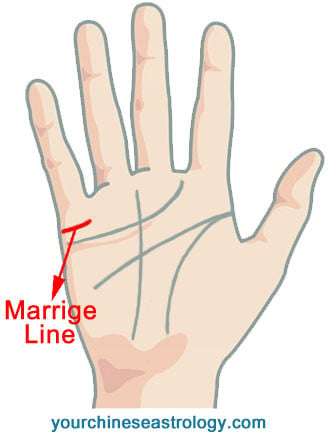
The length, shape, forks, islands, chains and numbers of the line reveals different meanings for your marriage life. Follow the analysis below to find out what your marriage line stands for. Please don't be upset if you find the line is not ideal. The line usually changes with the more you experience. No matter what kind of line you have, a sound marriage needs you to manage carefully. 

LENGTH
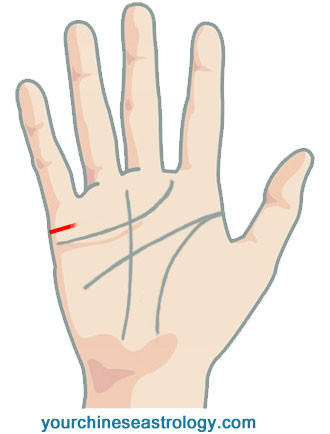

Fig 2
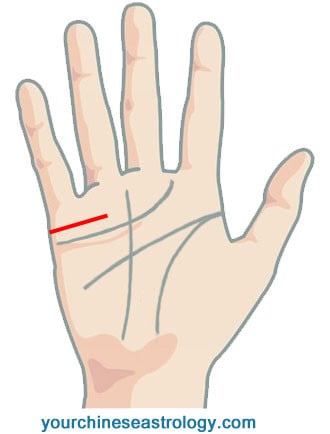
Fig 1
Straight Long 
A straight long marriage line indicates deep and long love. It shows you are passionate, gentle and usually have a happy family. If you only have one marriage line which is deep and long, close to or touch the Sun line, it shows you could not only enjoy a happy marriage but also achieve great success in career after marriage. (Fig 1)
Short 
If your marriage line is short, it indicates passionless to the opposite sex. If it's also shallow, you usually lack the patience to pursue the opposite sex and hard to fall deep when fall in love. In most times, if you own this kind of line, you are likely to get married lately. (Fig 2)

CURVED
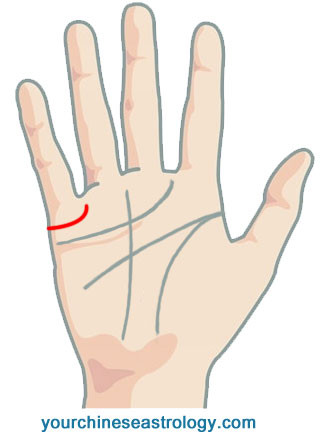

Fig 4
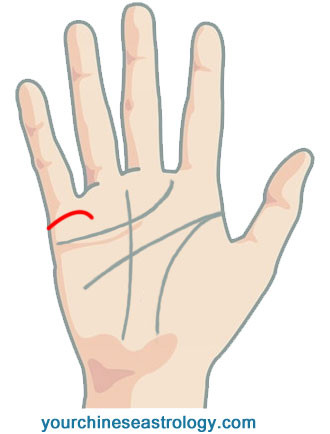
Fig 3
Curving Downwards
If your marriage line goes downwards at the end (Fig 3), it's not a good sign. It predicts your partner will die earlier than you. If it curves downwards suddenly, your partner may suffer from accidental death. Another situation is that it curves downwards and touches the heart line. This indicates marriage crises and personality clashes with your partner. So, a separation or divorce may be happened. 
Curving Upwards
If the line curves upwards at the end (Fig 4), it indicates constant in love and a settled marriage life. You usually don't have worries about your finance and can lead a rich life with your partner. Also, you could coordinate each other well thus enjoy a happy marriage. The more risen your marriage line, the happier you are. 

FORKED
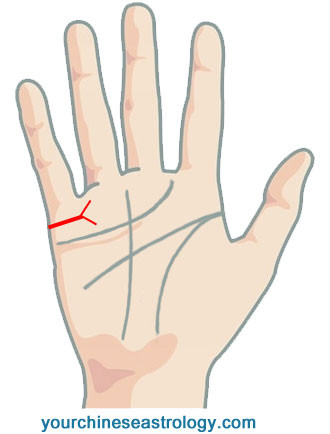

Fig 6
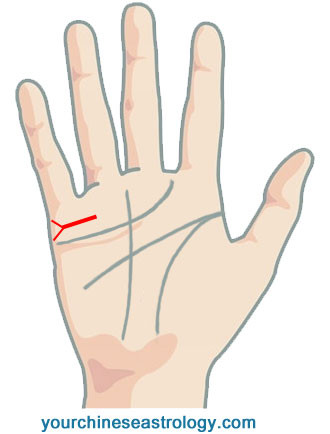
Fig 5
● If the line is forked at the beginning with a shape of "Y", it's not a good sign. It indicates split-up or divorce. If the fork is not big, the situation is not so bad as it only stands for breaking up for some period of time. So, to some extent, it also means re-union after separation.(Fig 5)
● If the line has split ends, it indicates marriage crises and separation. You may spend the whole life in confusion. You may also suffer from indigestion. In addition, fortune for your career is usually not satisfied before 55 years old. (Fig 6)  

BROKEN

The broken marriage line shows you are easy to meet setbacks in love or marriage. The serious situation is that you have many quarrels with your partner and end in divorce. The longer the broken part is, the more serious the situation is. If the break is short, that’s not too much problem. You have chance to make up finally.

ISLANDS
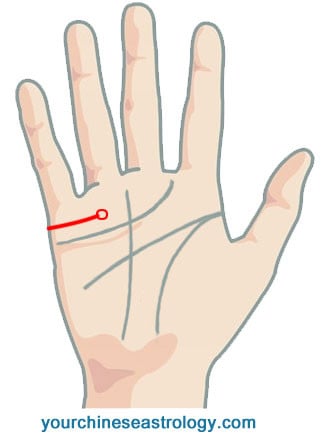

Fig 9
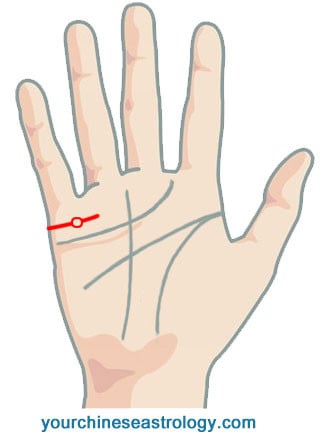
Fig 8
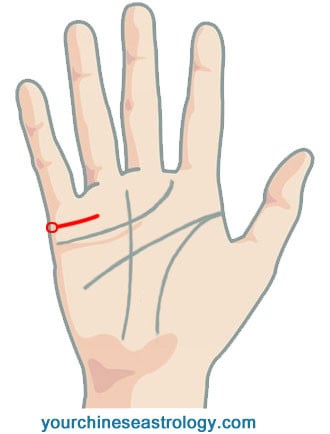
Fig 7
Island indicates psychological incompatibility with your partner or family conflict. 
● If an island appears at the beginning of the line, it shows you may not go smoothly in love relationship before marriage. (Fig 7)
● An island in the middle indicates twists and turns in love. (Fig 8)
● If the island appears at the end of the line, it indicated obstacles after marriage. (Fig 9)
● Many islands indicate unfavorable love relationship and marriage. 

X SIGN

X sign in marriage line is in auspicious in palmistry. It usually is a sign of trouble in marriage life and love issues. You are easy to have disputes, disagreements, quarrels or separation with your partner. Or, you may fall into a love triangle which makes your marriage life full of quarrels. 

GRILLES
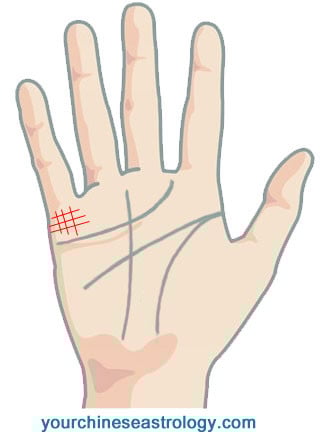


Grilles means that there are great ups and downs during your marriage life. You might have much abnormal sexuality. The singles having this kind of marriage line is hard to find a good partner and the married are easy to break up during the middle age.  

OVERLAPPING OF LINES
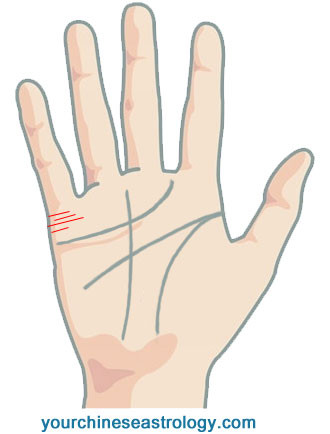

If you have multi disordered overlapping lines with different lengths, it shows you couldn't have an ideal love relationship or marriage. It's hard to meet a good lover and easy to spend the whole life without marriage. If you are married, it indicates your partner is usually interfered by the third party. Especially after the middle age, the life will be very hard for you. During your later year, you are easy to suffer hypertension or diabetes.

SHORT LINE ABOVE OR BELOW
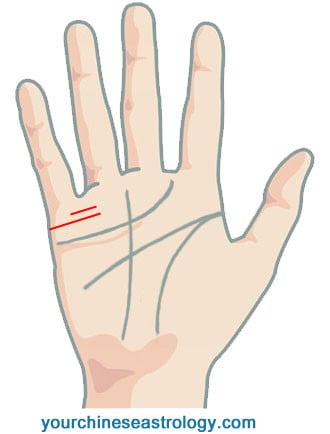


If there are short lines above or below the marriage line, it indicates many quarrels, hard love relationship and a stubborn character of you. You are also easy to get sick. 

WAVED OR CHAINED
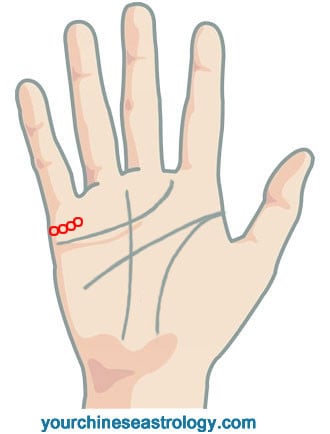

Fig 11
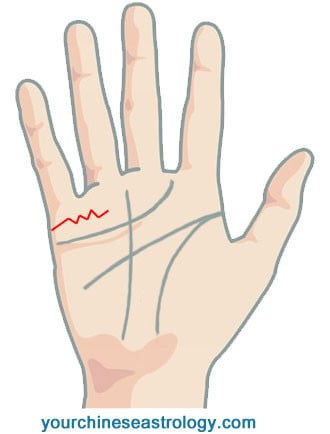
Fig 10

If your marriage line is waved (Fig 10) or chained (Fig 11) , you are easy to encounter villains and suffer emotional or marriage crises. You are usually stubborn, heartless and not nostalgia which cause you to separate even divorce after marriage. It's hard for you to get great achievement during your life. 

MEANINGS OF THE NUMBERS OF LINES

No Marriage Lines
If you don’t have marriage line, it means that you have no desire to love. You are not interested in or couldn’t be attracted by the opposite sex. You usually don't pay much attention on marriage and may be sexless. Instead, you like to focus more on your hobbies or career. If you are younger than 20, you may don’t have a marriage line. As you grow older and contact more with opposite sex, the marriage line may appear. If you already married and don’t have the line, the most case is that you don't have interest in your partner.  
Only One Marriage Line
If you have only one marriage line which is clear, you could find an ideal love to marry and live a happy life with your partner for the whole life after marriage. If the line is long without any surplus lines, it indicates a sound and lasting marriage.
More Than One Line 
In general, most of the people have marriage lines more than one. It's not accurate to think one will have how many times of marriage according to the numbers of the line. 
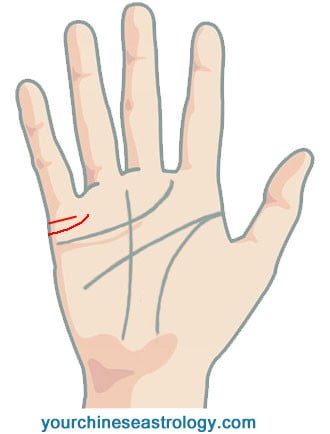
Fig 14
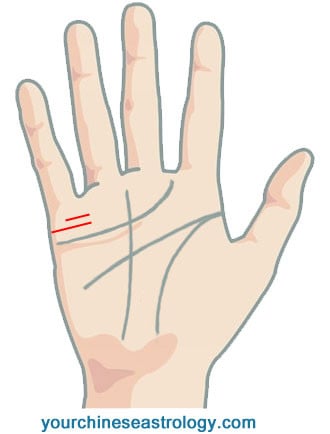
Fig 13
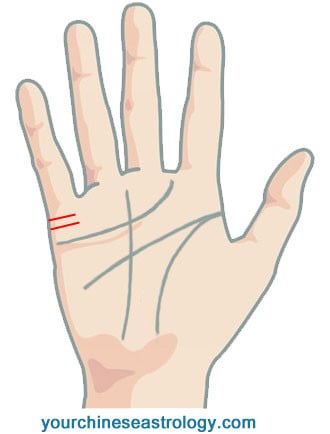
Fig 12
Two Marriage Lines 
Some people explain that two marriage lines means one have two marriages. In fact, it's not right. Most of the people have two lines. As long as the lines are deep, clear with the red color, the people could still have a sound marriage.    

● If you have two marriage lines running parallel with the same length, it indicates a tortuous marriage. Also, people who separate with his/her partner for a long time and reunite usually have this kind of marriage line. (Fig 12)   
● If the two lines running parallel with different lengths, you are easy to fall into love-triangle situations. (Fig 13)   
● If the two lines (one short and the other long) are not parallel, it indicates divorce or separation.  (Fig 14)  
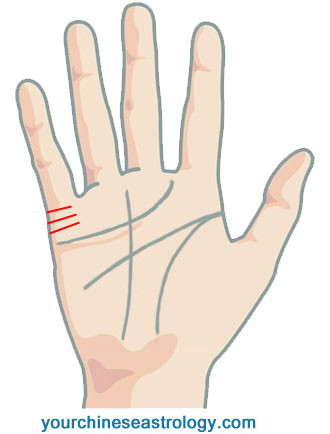
   

Fig 16
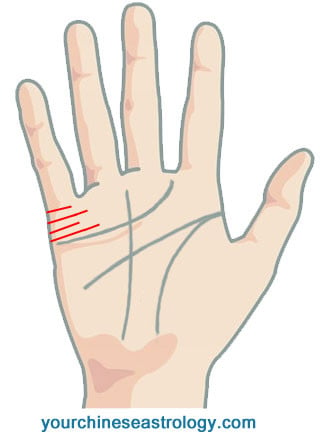
Fig 15
Three Marriage Lines 
Three lines mean mixed emotions and a weak concept of chastity. If you have three marriage lines, you may have a poor conception of life. You are usually talented, romantic and passionate to the opposite sex. If you couldn't utilize your wisdom, there would be troubles in love life. (Fig 15)
Four Lines
If you have four long and thin marriage lines, it shows you have a romantic character. You usually are not satisfied with an uneventful life. So, you are prone to have many love affairs. (Fig 16)
If there are over six marriage lines and there is no one can be regarded as a major one, it shows a complex marriage life. If the lines are long, it indicates a harsh term to select the marriage partner. You usually have a high requirement for your love and have a great pressure in life. 

https://www.yourchineseastrology.com/palmistry/marriage-line-reading.htm

Tuesday, June 02, 2020

Mark 12:13-17 | Silver Roman Denarius Coin | Give back to Caesar what belongs to Caesar

Mark 12:13-17Give back to Caesar what belongs to Caesar
First Portrait Denarius of Julius Caesar,
issued in January, 44 B.C,
Silver struck coin
© Image courtesy of Classical Numismatic Group
The chief priests and the scribes and the elders sent to Jesus some Pharisees and some Herodians to catch him out in what he said. These came and said to him, ‘Master, we know you are an honest man, that you are not afraid of anyone, because a man’s rank means nothing to you, and that you teach the way of God in all honesty. Is it permissible to pay taxes to Caesar or not? Should we pay, yes or no?’ Seeing through their hypocrisy he said to them, ‘Why do you set this trap for me? Hand me a denarius and let me see it.’ They handed him one and he said, ‘Whose head is this? Whose name?’ ‘Caesar’s’ they told him. Jesus said to them, ‘Give back to Caesar what belongs to Caesar – and to God what belongs to God.’ This reply took them completely by surprise.
READ MORE
Reflection on the Roman Silver Coin

Caesar was the first Roman politician to strike coins with his own portrait during his lifetime, a generally unacceptable act of political arrogance in Rome. By the time of his death in 44 B.C. silver denarii with Caesar’s image were being widely used in Rome and throughout the empire. It is such a coin that Jesus is talking about in today’s Gospel reading: Hand me a denarius and let me see it’, continuing ‘Give back to Caesar what belongs to Caesar’.

Although the approach of the Pharisees is flattering at the beginning of our reading, Jesus realised that He was being tested. Jesus was very clever though and set up His whole strategic argument by asking for a coin: Hand me a denarius and let me see it. At first glance, this may be because Jesus Himself didn’t have such a coin on him. That may have been the case. But by asking one of the chief priests to reach into his purse and produce a Roman coin, it proved that the chief priest was already working with and a beneficiary of the ‘earthly’ Roman government…

by Patrick van der Vorst
8c103ae7-d582-4d59-ac65-22ede4d44b19.jpeg

A Taxing Question

A Taxing Question
June 2, 2020

Tuesday of the Ninth Week in Ordinary Time

Father Edward McIlmail, LC
Mark 12:13-17
Some Pharisees and Herodians were sent to Jesus to ensnare him in his speech. They came and said to him, "Teacher, we know that you are a truthful man and that you are not concerned with anyone's opinion. You do not regard a person's status but teach the way of God in accordance with the truth. Is it lawful to pay the census tax to Caesar or not? Should we pay or should we not pay?" Knowing their hypocrisy, he said to them, "Why are you testing me? Bring me a denarius to look at." They brought one to him and he said to them, "Whose image and inscription is this?" They replied to him, "Caesar's." So, Jesus said to them, "Repay to Caesar what belongs to Caesar and to God what belongs to God." They were utterly amazed at him.
Introductory Prayer: Lord, I come before you humbly. As one who has frequently fallen into sin, I am aware of my weakness. Your great love, though, assures me that your grace can keep me on the path to holiness.
Petition: Give me guidance, Lord, on a big decision that I have to make.
  1. Setting the Trap: The Pharisees and Herodians use an old ploy ― flattery ― to try to trap Jesus. It is a ploy that enjoys a long shelf-life. Flattery can cause us to lower our guard. "You're an intelligent person, why don't you …?" Or: "You're a good parent, you already have two kids. You don't really believe the Church on …?" Being Christian in the world often means living among devious people. Hence, Jesus warned us to "be shrewd as serpents and simple as doves" (Matthew 10:16). To maintain a balance, we have to live only for God. Is it Christ who shapes my day?
  1. Lying in Wait: They pose a false dilemma to Jesus. It's "either/or." Either Jesus must accept Caesar totally, or rebel against Rome. Such is how the world sees it. It's still either/or. Either we embrace Darwinism (no questions asked), or we cling to Creationism. Either we are tolerant of alternate lifestyles, or we are insufferable bigots. But things are more complicated than that. Moreover, the Catholic faith is often "both/and." Hence, we give to Caesar and to God what belongs to each. And how do we decide what belongs to whom? That's where things get tricky. And that is precisely why we are called as Christians to develop our gifts, our intelligence, our prayer life ― so as to make the right choices. Catholicism is not a religion for robots. It demands that we use our freedom and gifts responsibly to do God's will. Am I using my gifts well? Do I develop my skills and intellect so as to better serve God?
  1. The Trap is Sprung, the Game is Over: Jesus' response floors his critics. Why? Partly because he throws the question back to them. Now they have to decide what belongs to Caesar — and what belongs to God. "You must decide," was Karol Wojtyla's signature phrase as a confessor. Nothing can so frighten us as freedom. It frightened Jesus' audience. How am I using my own freedom? How am I using the time God gives me?
Conversation with Christ: Help me realize, Lord, that you are calling me in freedom. You respect the freedom you gave me, even if I misuse it. But I don't want to misuse it. I want to render a good account of my life at Judgment Day.
Resolution: I will read some Scripture or a few paragraphs from the Catechism or a papal document today, to try to form myself better in the faith.
Our Daily Meditation is also available with audio:
CLICK HERE TO START LISTENING!
FORWARD TO A FRIEND

Monday, June 01, 2020

Mark 12:1-12 | Maarten Van Valckenborg | Parable of the Wicked Tenants

Mark 12:1-12Parable of the Wicked Tenants
Parable of the Wicked Tenants,
Painted by Maarten Van Valckenborg (1535-1612),
Painted circa 1585,
Oil on canvas
© Kunsthistorisches Museum, Vienna
Jesus began to speak to the chief priests, the scribes and the elders in parables: ‘A man planted a vineyard; he fenced it round, dug out a trough for the winepress and built a tower; then he leased it to tenants and went abroad. When the time came, he sent a servant to the tenants to collect from them his share of the produce from the vineyard. But they seized the man, thrashed him and sent him away empty-handed. Next he sent another servant to them; him they beat about the head and treated shamefully. And he sent another and him they killed; then a number of others, and they thrashed some and killed the rest. He had still someone left: his beloved son. He sent him to them last of all. “They will respect my son” he said. But those tenants said to each other, “This is the heir. Come on, let us kill him, and the inheritance will be ours.” So they seized him and killed him and threw him out of the vineyard. Now what will the owner of the vineyard do? He will come and make an end of the tenants and give the vineyard to others. Have you not read this text of scripture:
It was the stone rejected by the builders that became the keystone. This was the Lord’s doing and it is wonderful to see?
And they would have liked to arrest him, because they realised that the parable was aimed at them, but they were afraid of the crowds. So they left him alone and went away.
READ MORE
Reflection on the Painting

To put this parable into context, it was not unusual in the first century for a wealthy investor to buy a farm or a vineyard and then leave it in the care of tenants. It was a concept that all the people listening to this parable would have been familiar with. Come harvest time, the investors would send someone to collect their portion of the proceeds and thus make their return on investment. In our parable today, the landowner is God, the vineyard represents Israel, and the tenants are the religious Jewish leadership who were trying to discredit Jesus.

Jesus is saying in this parable that His Father sent numerous prophets to Jerusalem, but they were not listened to and were even mistreated. But now God has sent His own Son, Jesus, hoping that He would be listened to… but as we know, He got killed too… Jesus is thus prophesying His own death in this parable, at the hands of the religious leaders.

Marten van Valckenborch was a Flemish Renaissance painter, specialising in landscape scenes, populated with religious or allegorical themes, such as our parable today. We see the vineyard on the left; the landlord sending his son in the top middle; and the wicked tenants mistreating the servants at the bottom right… All the elements of the parable depicted, in one painting…. All the elements of Jesus foreshadowing his own death, in this one parable…

by Patrick van der Vorst
8c103ae7-d582-4d59-ac65-22ede4d44b19.jpeg

Taking Mary into My Home

Taking Mary into My Home
June 1, 2020

Memorial of the Blessed Virgin Mary, Mother of the Church

Father Patrick Butler, LC
John 19: 25-34
Standing by the cross of Jesus were his mother and his mother's sister, Mary the wife of Clopas, and Mary of Magdala. When Jesus saw his mother and the disciple there whom he loved, he said to his mother, "Woman, behold, your son." Then he said to the disciple, "Behold, your mother." And from that hour the disciple took her into his home. After this, aware that everything was now finished, in order that the Scripture might be fulfilled, Jesus said, "I thirst." There was a vessel filled with common wine. So, they put a sponge soaked in wine on a sprig of hyssop and put it up to his mouth. When Jesus had taken the wine, he said, "It is finished." And bowing his head, he handed over the spirit.
Now since it was preparation day, in order that the bodies might not remain on the cross on the sabbath, for the sabbath day of that week was a solemn one, the Jews asked Pilate that their legs be broken, and they be taken down. So, the soldiers came and broke the legs of the first and then of the other one who was crucified with Jesus. But when they came to Jesus and saw that he was already dead, they did not break his legs, but one soldier thrust his lance into his side, and immediately Blood and water flowed out.
Introductory Prayer: You are true goodness and life, Lord. Closeness to you brings peace and joy. You deserve all of my trust and my love. Thank you for the gift of life, my family and above all of my faith. Thank you as well for giving us your Mother at the foot of the cross.
Petition: Lord, help me to grow in my filial love for Mary, your Mother and mine.
  1. Standing: Today is a Marian celebration; the memorial of “Mary, Mother of the Church”. Mary, like me, had no particular love of pain and sorrow. The first announcement of her vocation by the Archangel Gabriel mentioned nothing about it, being filled only with messianic promises. However, soon after Jesus’ birth, Simeon completed the dimensions that were to enlighten her vocation: “…and a sword will pierce your heart that the thoughts of many might be revealed”. Recognizing the fulfillment of her calling in the accompanying of her Son during his crucifixion, she does so with a desire to fulfill God’s mysterious plan, not reluctantly, but standing close to Jesus with all the sorrow that this implied for her. Mary never abandons her children when they are suffering.
  2. Last Will and Testament: The words Jesus speaks to his mother and his beloved disciple are equivalent to his last will and testament. He bequeaths what is most precious to him to a beloved person. To Mary, he gives the friend that he loves so much, who will also need her help in the difficulties he will face. To John, he gives his greatest human comfort, his mother who is his best disciple. He knows that she needs him, an adopted son, to comfort and accompany her.
  3. Mary Makes My Home Sweet: John took his responsibility for Mary seriously, taking her into his own home. Home for John was nothing less than the Church that Jesus founded. Mary was to have the pride of place there, as Jesus’ mother, and as she who knew, loved and served him best. She also took her role seriously, so seriously that she immediately perceived that all those she encountered were her adoptive sons and daughters. In this house that is the Church, Mary is the sweetness of the traditional saying, “Home, sweet home”.
Conversation with Christ: Jesus, I can’t thank you enough for entrusting your mother to me and me to her. I want to take care of her by being an attentive, faithful son or daughter who imitates you. That’s what will console her and make her heart rejoice. Mary be always at my side and intercede for me before God, in order that I persevere in following your Son.
Resolution: I will make my devotion to Mary very personal, whether it be in spontaneous conversation with her or contemplating the mysteries of Christ’s life while praying the Rosary.
Our Daily Meditation is also available with audio:
CLICK HERE TO START LISTENING!
FORWARD TO A FRIEND