Tuesday, October 19, 2021

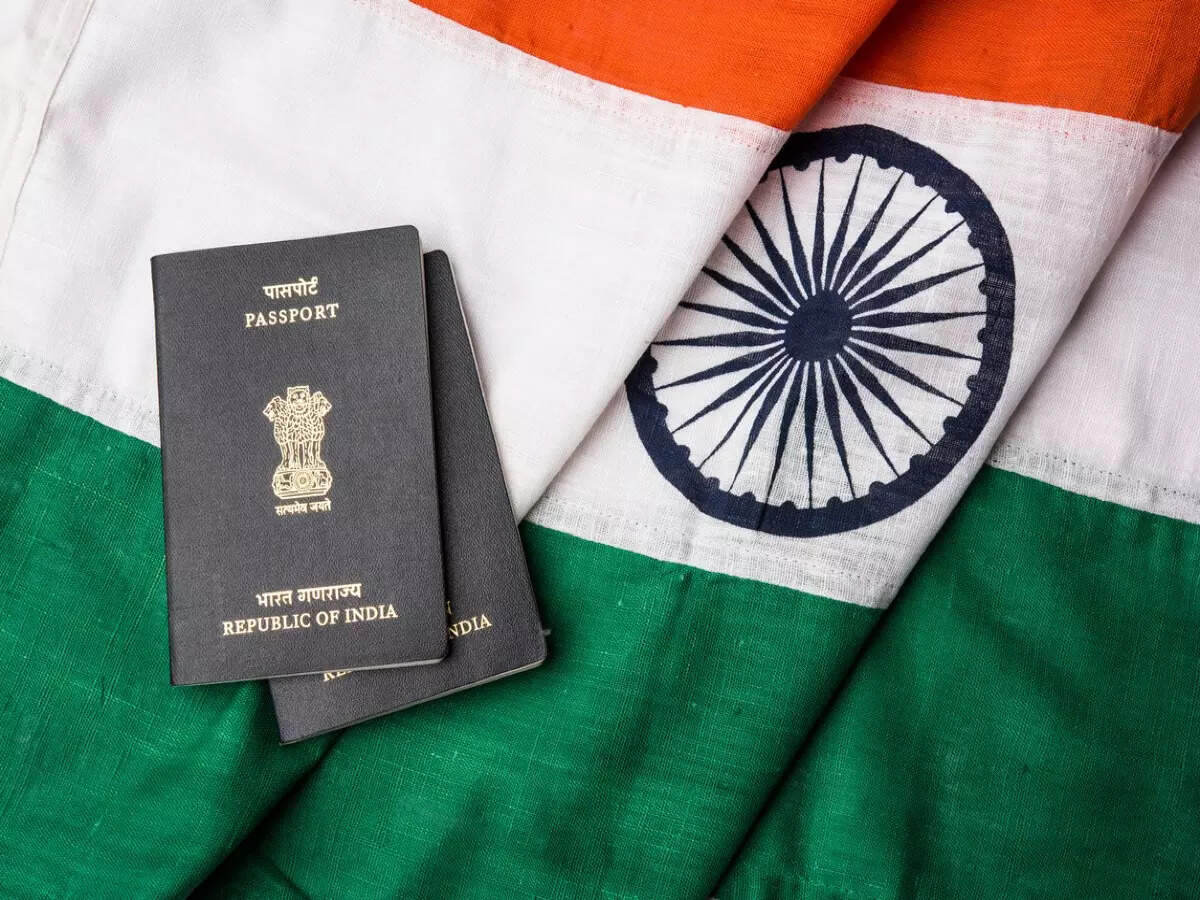
World's most powerful passports as per Henley's Index; India at 90th spot

World's most powerful passports as per Henley's Index; India at 90th spotCredit: iStock


Henley Passport Index 
has been recently announced; it ranks the world's most powerful passports. The same is decided by the the number of countries that allow visa-free travel to the holders of these passports. Going by the index, Japan and Singapore top the list; while India ranks at the 90th place, toppling down by four ranks as compared to its last year's rank. 

While Indian passport holders are allowed visa-free travel to just 58 nations, holders of Japan/Singapore passports can travel visa-free to 192 countries! South Korea and Germany are pegged at the second position, and holders of the same can travel to 190 visa-free destinations. 

At the bottom is Afghanistan, with an Afghan passport allowing visa-free travel to only 26 countries. Other passports at the bottom of the index are passports from Iraq, Syria, Pakistan and Yemen. Most of the countries at the bottom are either war-torn or seeing some state of strife. It has to be noted that the index has not taken into account the current COVID related restrictions. 

The index also throws light on the gap between the most powerful and least powerful passports, and how the same has widened owing to the many COVID related travel bans and restrictions. The research also indicates that the gap might widen further as nations with strongest passports have put in place strict barriers for travellers from other nations.

Keyboard Shortcuts

Papás, Si su hijo estudia por computadora debe aprender esto.
Ctrl + E - Select All
Ctrl + N - Black
Ctrl + C - Copiar
Ctrl + D - Stuff
Ctrl + B - Buscar
Ctrl + G - Guardar
Ctrl + L - Reemplazar
Ctrl + K - Italic
Ctrl + U - Nuevo libro de trabajo
Ctrl + A - Open
Ctrl + P - Print
Ctrl + R - Nada bien
Ctrl + S - Subrayado
Ctrl + V - Pegar
Ctrl W - Cerrar
Ctrl + X - Cortar
Ctrl + Y - Repeat
Ctrl + Z - Deshacer
F1 - Help
F2 - Edición
F3 - Pegar el nombre
F4 - Repite la última acción.
F4 - Al ingresar una fórmula, cambie entre referencias absolutas / relativas
F5 - Ir a
F6 - Panel siguiente
F7 - Corrector ortográfico
F8 - Mode Extension.
F9 - Recalcular todos los libros
F10 - Turn On Menu Bar
F11 - New Graphic
F12 - Save As
Ctrl +: - Insertar la hora actual
Ctrl +; - Insertar la fecha actual.
Ctrl + "- Copy cell value above
Ctrl + '- Copia la fórmula de la celda de arriba
Change - Compensation adjustment for additional functions in Excel menu
Shift + F1 - ¿Qué es?
Shift + F2 - Editar comentario de celda
Shift + F3 - Pegar la función en la fórmula
Shift + F4 - Buscar siguiente
Mayús + F5 - Buscar
Mayús + F6 - Panel anterior
Mayús + F8 - Añadir a la selección
Shift + F9 - Calcular la hoja de cálculo activa
Shift + F10 - Pop-Up Menu Display
Shift + F11 - Nueva hoja de cálculo
Mayús + F12 - Guardar
Ctrl + F3 - Set Name
Ctrl + F4 - Close
Ctrl + F5 - XL, tamaño de la ventana de restauración
Ctrl + F6 - Ventana del siguiente libro de trabajo
Shift + Ctrl + F6 - Ventana del libro de trabajo anterior
Ctrl + F7 - Mover ventana
Ctrl + F8 - Cambiar tamaño de ventana
Ctrl + F9 - Minimizar el libro de trabajo
Ctrl + F10 - Maximize or Restore Window
Ctrl + F11 - Insertar 4.0 hoja de macros
Ctrl + F1 - Open File
Alt + F1 - Insert a Chart
Alt + F2 - Save As
Alt + F4 - Salida
Alt + F8 - Macro Dialogue Box
Alt + F11 - Editor de Visual Basic
Alt + 64 - @
CTRL + Esc. Puedes regresar rápidamente a la pantalla de inicio. Y aquí no ha pasado nada.
Ctrl + Shift + F3 - Create a name using column and row tags names
Ctrl + Shift + F6 - Ventana anterior
Ctrl + Shift + F12 - Impresión
Alt + Shift + F1 - Nueva hoja de cálculo
Alt + Shift + F2 - Guardar
Alt + = - AutoSum
Ctrl + `- Cambiar valor / visualización de la fórmula
Ctrl + Shift + A - Insert the names of arguments in the formula
Alt + flecha abajo - lista de vista automática
Alt + '- Formato de diálogo de estilo
Ctrl + Shift + ~ - Overall Format
Ctrl + Shift +! - Formato de coma
Ctrl + Shift + @ - Formato de hora
Ctrl + Shift + # - Date Format
Ctrl + Shift + $ - Formato de moneda
Ctrl + Shift +% - Formato de porcentaje
Ctrl + Shift + ^ - Formato exponencial
Ctrl + Shift + & - Coloque el borde del contorno alrededor de las celdas seleccionadas
Ctrl + Shift + _ - Eliminar el borde del contorno
Ctrl + Shift + * - Select Current Region
Ctrl ++ - Insertar
Ctrl + - - Eliminar
Ctrl + 1 - Formato del diálogo de celda
Ctrl + 2 - Negrita
Ctrl + 3 - cursiva
Ctrl + 4 - Subrayado
Ctrl + 5-Stuck
Ctrl + 6 - Mostrar / Ocultar objetos
Ctrl + 7 - Mostrar / Ocultar barra de herramientas estándar
Ctrl + 8 - Alternar símbolos de esquema
Ctrl + 9 - Ocultar líneas
Ctrl + 0 - Ocultar columnas
Ctrl + Shift + (- Mostrar líneas
Ctrl + Shift +) - Mostrar columnas
Alt o F10 - Activar el menú
Ctrl + Tab - On Toolbar: Next Toolbar
Shift + Ctrl + Tab - En la barra de herramientas: Barra de herramientas anterior
Ctrl + Tab - In One Book: Activate Next Book
Mayús + Ctrl + Tab - En una c arpeta: activar la carpeta anterior
Tab - Next Tool
Mayús + Tabulador - Herramienta anterior
Entrar - Hacer el pedido
Shift + Ctrl + F - Fountain Dropdown List
Shift + Ctrl + F + F - Cell dialog format Source tab
Mayús + Ctrl + P - Lista desplegable de tamaño de punto.

Being Vigilant Throughout Life

October 19, 2021
Tuesday of the Twenty-Ninth Week in Ordinary Time
Readings for Today


Saints Jean de Brébeuf, Isaac Jogues, Priests and Martyrs; and their Companions, Martyrs—USA: Memorial


Video

Jesus said to his disciples: “Gird your loins and light your lamps and be like servants who await their master’s return from a wedding, ready to open immediately when he comes and knocks.”  Luke 12:35–36

What does it mean to “Gird your loins?” This phrase, which is not commonly used today, literally means “tighten your belt.” It traditionally refers to one who is wearing a long robe that makes it difficult to move quickly and easily. Thus, to gird your loins means that you tuck in the long robe and tighten your belt so that you are prepared for some physical activity. It was also commonly used to exhort those preparing for battle to get ready. Symbolically, then, this phrase simply means to be ready for something difficult or challenging. It means to be vigilant and prepared. Spiritually speaking, Jesus is telling His disciples to be ready for the spiritual battle that awaits them.

Jesus then tells His disciples to light their lamps. That phrase could have a variety of meanings, such as “Do not remain in the darkness of sin or ignorance” or “Let the light of charity shine forth as you navigate through life” or “Allow the light of truth to shine within your mind.” Hence, by the light of faith, they are to be prepared and vigilant, ready to do all that the Lord sends them to do.

Today’s Gospel ends by Jesus saying that the disciples will be truly blessed if they remain vigilant even until the second or third watch of the night. Some Church Fathers see this as a reference to three periods in one’s life: childhood being the first watch, middle age being the second, and old age being the third watch.

With these meanings understood, one message we can take from this Gospel is that Jesus is calling us to be vigilant in our faith at every moment of our lives. For those who have lived many years, it may be useful to look back at how faithful you have been throughout every period of your life. God wants to use you in many ways during childhood, through your middle age, and even in old age. The journey of faith must never end. Instead, it must continually deepen as you age. But this will only be possible if you “gird your loins” and “light your lamps.” You must continually be vigilant, continually attentive to the light of faith, and continually be ready to act every time God inspires you to act.

Reflect, today, upon the lifelong journey of faith and service of God to which you are called. Being a Christian is not simply something you are born into. If you were born into the faith, then ponder especially what you have done throughout your life to daily deepen and strengthen that faith. Ponder whether or not you have diligently responded to the countless inspirations of the Holy Spirit to spread the light of faith to others. If you have been truly faithful throughout your life, then give thanks to God and recommit yourself to this fidelity for the rest of your life. If you have lacked faith and vigilant attentiveness to the will of God, then place that in the hands of God’s mercy and resolve from this day forward to do all you can to respond to the will of God the moment God calls. 

My most merciful Lord, I thank You for the countless ways throughout my life that You have spoken to me, calling me to fulfill my mission of faith and love in this world. I commit to You, this day, to always remain vigilant and attentive to You everytime You call. Use me, dear Lord, so that I may bring the light of Your saving Gospel to a world in need. Jesus, I trust in You.

Monday, October 18, 2021

Evangelizing the World

Monday, October 18, 2021

Feast of Saint Luke, Evangelist

Readings for Today


Video

The Lord Jesus appointed seventy-two disciples whom he sent ahead of him in pairs to every town and place he intended to visit. He said to them, “The harvest is abundant but the laborers are few; so ask the master of the harvest to send out laborers for his harvest.” Luke 10:1–2

Saint Luke, whom we honor today, was a true evangelist. As an evangelist, he followed the inspiration from our Lord and was used to bring God’s saving message to the ends of the earth. And there is little doubt that his ministry will continue to have a transforming effect on the lives of many until the end of the world. Tradition states that Saint Luke became a martyr, being hanged on an olive tree. He is identified in the New Testament as a physician and as a disciple of Saint Paul. Both the Gospel of Luke and the Acts of the Apostles are attributed to him.

Saint Luke is often spoken of as an evangelist to the gentiles. His Gospel was written in such a way that it didn’t presume a full understanding of the Jewish faith and customs. Therefore, it is believed to have been primarily written for those who are not of Jewish origin. Thus, the life and mission of Saint Luke must remind us that the Gospel needs to be shared with all people, especially with those who do not have a deep and sustaining relationship with God.

In today’s Gospel from Saint Luke, we read that Jesus sent seventy-two disciples “to every town and place he intended to visit.” Only Luke mentions the larger scale sending of seventy-two disciples. The other Gospels only mention the sending of the Twelve. Though many of these seventy-two disciples would have gone to Jewish territory, some would have unquestionably gone to non-Jewish territory. The mission of these seventy-two was to prepare everyone they encountered for the preaching of Jesus and for the establishment of the Kingdom of God.

As we honor Saint Luke today and read this passage from his Gospel, we are reminded that we are all sent by our Lord. We are sent to those who share our faith, such as family, friends and fellow parishioners. We are sent to love them and do all we can to help deepen their faith and love of God. But we are also called to share the Gospel with those who do not yet know Jesus as their Savior. There are so many people we encounter every day who have never truly met our Lord. Are there people in your life that God is calling you to reach out to? Who do you know that God may be calling you to share the Gospel with?

Reflect, today, upon the fact that the Gospel is meant for everyone. Speak to our Lord and tell Him that you are ready and willing to be used by Him to bring His saving message to others. As you do so, wait on the Lord, listen to His inspiration, and respond when He calls. If someone comes to mind whom you sense God is calling you to evangelize, begin to pray for that person. Pray for them every day and be attentive to any inspiration God gives you to share His love and saving message with them. Do not be afraid to be an evangelist like Saint Luke. Doing so might make an eternal difference in someone's life.

My saving Lord, You sent Your disciples on a mission to share Your saving message with all. Today I especially thank You for the life and ministry of Saint Luke. Please use me, dear Lord, to imitate his wonderful example and to share Your glorious life with others. Please lead me and inspire me to especially reach out to those whom You have put into my life. Jesus, I trust in You.

Sunday, October 17, 2021

A True Leader

October 17, 2021
Twenty-Ninth Sunday in Ordinary Time, Year B
Readings for Today


Video

Jesus summoned the twelve and said to them, “You know that those who are recognized as rulers over the Gentiles lord it over them, and their great ones make their authority over them felt. But it shall not be so among you. Rather, whoever wishes to be great among you will be your servant; whoever wishes to be first among you will be the slave of all.”  Mark 10:42–44

This is certainly easier said than done.  This passage reveals one serious temptation that those “who are recognized as rulers” may fall into.  This is the temptation of an abuse of power and a lack of humble leadership.

For example, tradition states that at the heart of the fall of lucifer and the demons was a desire for power.  “I will not serve” are the words attributed to lucifer.  In other words, the desire for power and to be served by others was real and very powerful for these fallen angels.  So it is with each one of us.

Though we may not be in a position of great power over others, we will most likely all struggle with the desire for power.  This can happen in just about any context.  Take, for example, a friendship.  Very often when there is the slightest disagreement on something, we want our own way.  We want to be in charge.  Or take the example of home life.  How many enter into family life with a desire to serve the others and to humbly submit to the others’ wills?  This is hard to do.  It’s much easier to want to be the boss and to dictate to others what is to happen in this or that situation.

In the passage above, Jesus makes it clear to His Apostles that when they exercise their “authority” over others they are not to make it “felt” by others.  In other words, Jesus was not calling His Apostles to be leaders by brute force, intimidation, manipulation or by any other severe exercise of their authority.  The authority that Jesus wanted was much different.

Christian authority is centered in love and humility.  It’s a “leadership” that is lived in true humility.  This leadership wins over hearts, minds and wills of others and invites them to follow in charity and love.  This must happen within the family, among friends, at church and within society.

Reflect, today, upon how you lead others.  Do you expect to be the “boss” and expect others to follow you because of your authority?  Or do you lead others by humility and love drawing them to Christ through your goodness?  Commit yourself to Christian leadership as Jesus intended and you will be amazed at the effect it has within your family, among friends and within the larger community.

Lord, help me to be a humble leader.  Help me to let Your heart of love and mercy shine forth and to lead by the goodness and kindness of Your merciful heart.  Help me to set aside all pride and egotism and to become a servant of all.  Jesus, I trust in You.

Saturday, October 16, 2021

Peace in the Face of Judgement


October 16, 2021
Saturday of the Twenty-Eighth Week in Ordinary Time
Readings for Today

 Saint Hedwig, Religious—Optional Memorial

Saint Margaret Mary Alacoque, Virgin—Optional Memorial


Video

When they take you before synagogues and before rulers and authorities, do not worry about how or what your defense will be or about what you are to say. For the Holy Spirit will teach you at that moment what you should say.” Luke 12:11–12

Jesus lived this Gospel passage in His own life to perfection. He was arrested, interrogated, falsely condemned and questioned by the Chief Priest, Herod and Pontius Pilate. During His interrogations, sometimes He spoke and at other times He remained silent. In preparation for these interrogations, Jesus did not study each ruler ahead of time, trying to figure out what He should say and not say. He did not prepare a defense but relied upon His perfect union with the Holy Spirit and with the Father to be led at every moment in His human nature.

Though it may be unlikely that you will be arrested for your faith and put on trial for being Christian by the civil authorities, it is possible that you will experience various other forms of interrogation and condemnation at times during which you are challenged to respond. And more likely, if you are judged by another, you may be tempted to defend yourself in anger, attacking back.

This Gospel passage, when clearly understood and lived, should have the effect of calming you and reassuring you during any and every experience of judgment. The Catechism of the Catholic Church states that “To avoid rash judgment, everyone should be careful to interpret insofar as possible his neighbor's thoughts, words, and deeds in a favorable way” (# 2478). And though you must always strive to do this yourself, there will most likely be times when others do not act in this careful and truthful way toward you. Thus, if you are judged by another, even if what they say has truth to it, it is important that you not react with defensiveness and anger, unless the Holy Spirit has unmistakably led you to do so. The key message Jesus gives is that you must trust that the Holy Spirit will always lead you as you humbly and continually seek to follow His every prompting. This is only possible if you have built a firm habit of attentiveness to the Voice of God within your conscience.

Because the experience of rash judgment, detraction, calumny and the like are painful to encounter, you must prepare your defense ahead of time by learning to only rely upon the Holy Spirit in all things. Jesus exhorts us to do so! Therefore, if you daily and humbly seek to fulfill God’s will, hear His voice, and respond with generosity, then you can be certain that when the time comes and you experience these forms of judgment, you will be ready. The Holy Spirit will speak to you, inspire you, console you and give you every grace you need to respond in accord with God’s will. Do not doubt this. Have faith and confidence in these words and this promise of our Lord.

Reflect, today, upon the ways that you have responded in the past to the judgment of another. Try to call to mind specific moments when this has happened. Did you respond with similar judgments? Were you filled with anger? Did you brood over injury? Did you lose your peace of heart? If you have fallen into these temptations, then commit yourself in faith to believe what Jesus says today. Trust Him. Trust that He will be with you in those difficult moments in the future and pray that you will be graced to respond only as the Holy Spirit directs you.

My innocent Lord, You were put on trial, judged and falsely condemned. Yet in all of that, You were the Innocent Lamb Who always loved and spoke truth with perfection. When I experience judgment in my life, please fill me with peace of heart and trust in Your promise that the Holy Spirit will be with me, inspiring me and leading me in accord with Your perfect will. Holy Spirit, I abandon myself to You now and always. Jesus, I trust in You.

Friday, October 15, 2021

Sincerity and Integrity

October 15, 2021
Friday of the Twenty-Eighth Week in Ordinary Time
Readings for Today


Saint Teresa of Jesus, Virgin and Doctor—Memorial


Video

“There is nothing concealed that will not be revealed, nor secret that will not be known. Therefore whatever you have said in the darkness will be heard in the light, and what you have whispered behind closed doors will be proclaimed on the housetops.” Luke 12:2–3

Immediately prior to this passage quoted above, Jesus told His disciples: “Beware of the leaven—that is, the hypocrisy—of the Pharisees.” This comes after Jesus gives a long and very direct series of condemnations of these leaders in the previous chapter. Jesus is quite serious about their destructive actions. So, after directly confronting them, He then turns to His disciples to warn them of the consequences of these hypocritical leaders.

A hypocrite is one who pretends to have some moral virtues but, in truth, is only deceiving himself and attempting to deceive others. For that reason, Jesus assists His disciples by sharing with them the fact that all truth will eventually come to light. Thus, every good deed will eventually be seen by all for its goodness, and every evil intent, no matter how hidden, will eventually come to light. 

Though the immediate temptation for many in hearing this passage will be to think about others who they think fall into the sin of hypocrisy, it may be far more useful to ponder these truths for oneself. The simple message that Jesus preaches is that we must be people who are truthful in every way. We must be honest with ourselves and make sure that we are fully aware of our inner life, seeing ourselves only in the way that God sees us. This act of honesty and integrity is one of the best ways by which we prepare ourselves for eternal life. How sad it would be if we went through life pretending, on the surface, to be something we were not, only to have the full truth divulged at our final judgment when it is too late to change.

Being honest with ourselves can be difficult. It’s normal for us to want to be good, to want to be holy, and to want others to think this way about us. For that reason, it is very common for us to put forth only the best image of ourselves, hiding many other things that may embarrass us and even humiliate us. And though we do not have any moral obligation to tell everyone about every sin we struggle with interiorly, it is morally essential that we face it ourselves and do so with the grace of God.

One practical way to do this is to ponder the above Scripture passage. Jesus makes it clear that at some time, in some way, everything within us in our hearts and minds will come to light. For some this will happen, by God’s grace, during this life as a way for them to change. For others, these secrets will only come to light at their final judgment. The truth, however, is that all that we are, all that we think, and all that we do in a hidden way will come to light. And if that frightens you in some way, that is good. Sometimes we need a holy fear to encourage us to look inward and to deal with all that we keep hidden from others.

Reflect, today, upon the importance of striving for a life of true transparency and integrity. The best way to do this is to live every day as if everything within your heart were visible for all to see. If that means you need to change in some way so as to be at peace with what will eventually come to light, then work diligently on making that change here and now. The opposite of hypocrisy, for which the Pharisees were firmly condemned, is honesty and sincerity. Spend time reflecting upon these beautiful virtues and pray that the Lord will gift you with them so that you can live a life of true integrity here and now in preparation for that glorious day of judgment, when all will be “known” and “proclaimed on the housetops.”

My revealing Lord, You see all things. You know my heart in every way. Please grace me with the ability to see myself as You see me and to know my inner heart as You know me. As the deepest truths of who I am come to light for me to see, I pray that I will also have the grace to sincerely change so that I may truly glorify You with my actions and become a source of authentic inspiration to all. Jesus, I trust in You.

Thursday, October 14, 2021

Overcoming Plotting

October 14, 2021
Thursday of the Twenty-Eighth Week in Ordinary Time
Readings for Today


Saint Callistus I, Pope and Martyr—Optional Memorial


Video

When Jesus left, the scribes and Pharisees began to act with hostility toward him and to interrogate him about many things, for they were plotting to catch him at something he might say. Luke 11:53–54

Over the past few days, we have been reading Saint Luke’s version of Jesus’ “Woe to you” rebukes of the scribes, Pharisees and the scholars of the law. Today’s Gospel concludes these rebukes of love by pointing out that these religious leaders did not convert. Instead, they began plotting against Jesus so as to “catch him at something he might say.” This is what happens when people use God's holy law as a weapon to attack.

Normally, we take inspiration from the Holy Scriptures in a positive way, meaning, by reflecting upon Jesus’ words and actions and applying them to our lives. However, we can also learn from the evil others commit and allow their actions to inspire us to avoid their sin. In today’s Gospel, we are invited to ponder the obsessive plotting of these religious leaders so as to consider whether we also are guilty of their sin.

First, note that at the conclusion of Jesus’ rebukes, these religious leaders “began to act with hostility” toward Jesus. Normally, when we act with hostility toward another, it is done with the mindframe that we are right and they have done something wrong. We justify our hostility by pointing to their perceived sin. However, it must be understood that every act of hostility on our part is a clear indication that we have started down the road of sin and are not justified in our obsession.

Notice also that these religious leaders exercised their hostility toward Jesus by interrogating Him. In other words, in their anger, they kept asking Him questions so as to find some fault with Him. They tried to trick Him and trap Him with their speech using God’s very Law handed down through Moses and the prophets. But they manipulated that Law so as to justify their hostility and, out of pride, to falsely accuse Jesus.

Think about any times in your life in which you found yourself somewhat obsessed with what you judged to be the sin of another. Hostility in this case can even be passive, meaning you may present a kind disposition on the surface, but interiorly you are obsessively thinking about how you can condemn the person. Often when this happens, we can feel justified in that we convince ourselves that justice must be done and that we are the dispensers of that justice. But if God is in control of our lives, He will not call us to obsessive plotting in regard to another. Instead, when we are following the will of God, we will sense Him inspiring us to act with immediacy, calm, joy, kindness, honesty, and freedom from all anger and obsession.

Reflect, today, upon any way that you have seen this misguided tendency within your own life. If you can identify a time when you struggled with hostility toward another, look at the fruit it bore. Was God glorified through your actions? Did this leave you at peace or agitated? Were you fully objective in your thinking? Be honest with these questions and you will begin to discover the road to freedom from such obsessive thinking. God wants you to be at peace. If there is injustice, trust that our Lord will sort it out. You, for your part, must continually work to forgive, act with charity, and direct your attention to the will of God as it is gently presented to you.

My patient and kind Lord, You were falsely accused and condemned by many of the religious leaders of Your time because You spoke the pure truth with love, clarity and boldness. When I act with hostility and anger toward another, help me to turn from these sins so that I will never condemn, never judge and never manipulate Your divine Law for my own purposes. Fill me with Your peace and charity alone, dear Lord. Jesus, I trust in You.

Wednesday, October 13, 2021

NDF-CPP-NPA FIASCO

Juan Ponce Enrile

Of the events that impelled President Marcos to declare martial law in the country, the most critical was the act of the NDF-CPP-NPA to import guns, rockets, ammunitions and military supplies. The NDF-CPP-NPA had two such projects: the MV Karagatan and the MV Andrea.
The Karagatan succeeded. However, it was thwarted. Her cargo of war materials were landed but they were mostly captured by the government. The Andrea failed. Andrea sunk in the waters of the West Philippine Sea and her cargo was lost.
The debacle angered the NDF-CPP-NPA. It derailed their quest for political power. It pushed President Marcos to declare martial law and saved the country from communism. This is why the NDF-CPP-NPA cannot forget and forgive President Marcos. He stopped their plan to subjugate the country and to establish a communist rule for the Filipino people.
In effect, the Karagatan incident is a significant prelude to martial law. Its story must be told so that the public will know what really was and why it pushed Presi dent Marcos to declare martial law.
Late in the afternoon of July 4, 1972, Antonio Gomez, while flying his plane over the Pacific along the eastern coast of the Sierra Madre in Isabela, noticed a ship moored near a beach. Gomez saw men unloading cargoes on small bancas and piles of wooden crates on the beach. Gomez reported what he saw to the Philippine Constabulary in Isabela.
The Isabela PC provincial commander (Lt. Col. Benjamin Dizon) immediately formed an eight-man team of PC soldiers led by Lt. Edgar Aglipay to check the report of Gomez. In the early morning of the next day, the Aglipay team took off on board a Huey helicopter and landed on an airstrip in Palanan.
From there, the team walked for hours to a logging camp of Valeriano Bueno. There, Lt. Aglipay borrowed a tugboat to locate the mysterious ship. The team found it late in the afternoon. It was moored in Digoyo Bay. The ship was deserted. The team found large quantity of military weapons and supplies inside the ship. Also found were foodstuffs, empty rice sacks, powerful radio sets, maps, books written in Chinese characters, poems in Tagalog of Ka Amado Hernandez, and many empty wooden crates.
The team decided to tow the ship away. However, when the team started to pull the ship from its mooring, bursts of gun fire suddenly erupted from behind the thickets on the shoreline towards the Karagatan and the tugboat. The sudden firing startled the team. The tugboat chief mate suffered gunshot wounds on his buttocks. Men on the Karagatan were also wounded.
The tugboat cut loose its towing line and left the Karagatan with the Aglipay team on board. Lt. Aglipay contacted the PC headquarters in Isabela for help. But none came. The weather was ugly. A strong typhoon was over the area. This made the position of team precarious. With the bad weather troops could not be moved either by air or by sea. Even the jet fighter planes that I authorized to give air cover for the Aglipay team could not take off.
The Aglipay team was thus marooned inside the Karagatan. Through the nights and days of the foul weather, the marooned men were harassed by the big swells that battered the ship and the intermittent burst of firing from the shoreline.
The marooned men had no food to eat nor fresh water to drink. They were tired, sleepless, hungry, and thirsty. They could not eat the foodstuff on the ship, and they could not find fresh water to drink
Days later, when the typhoon weakened, a Philippine Army contingent from Task Force Saranay under Lt. Arsenio "Bobby" Santos finally reached and rescued the Aglipay team.
Bobby Santos with 32 army soldiers flew by military helicopters to Palanan in spite of inclement weather. They landed on the Valeriano Bueno logging camp. From there, they walked to Digoyo Bay under heavy rain. When they reached the place, they immediately engaged the rebels. Arrayed against them were an estimated rebel force of 300 men. They were outnumbered 10 to 1. They were outnumbered, but never outfought.
Bobby Santos and his men stood their ground. They engaged the rebels for several days under severe weather condition. I asked General Romeo Espino to support them with jet fighter planes. When the typhoon abated, Army rangers and elements from the Presidential Guard Battalion joined the Santos team.
Not long after, the rebels suddenly silenced their guns. They stopped firing. The entire place became deathly quiet. The rebels abandoned their bunkers. Government troops captured their camp deep in the jungles of the Sierra Madre. The government troops scoured the surrounding heavily forested area. They found initially a cache of 100 M14 rifles, 15,000 rounds of ammunition, and 40 sacks of rice.
The talk of the town at the time was that Lt. Col. Victor Corpus, who defected earlier to the CPP-NPA, led the rebels in that encounter in Digoyo. But that story was not confirmed.
The government troops continued their search of the nearby jungles around Digoyo Bay. And they found another cache of 491 M14 rifles, one rocket launcher, one Browning automatic rifle, five Garand rifles, 150,900 rounds of M14 ammunitions, 900 magazines for M14 rifles, six sacks of magazine pouches, and 564 rounds of 40 millimeter rocket projectiles. All told, the Palanan military campaign earned for the government more than 1,000 M14 rifles from the NPA rebels.
The Karagatan incident greatly alarmed President Marcos. He referred to it as "A conspiracy of greater proportion than we expected." Perhaps his remark was prompted by the fact that in those days the total armed force of the government was less than 50,000 men and women.
The people also were alarmed. They were shocked to learn that the NDF-CPP-NPA imported foreign war materials and supplies for themselves. The public saw on television and print media the quantity and quality of the military weapons and supplies brought in by the NDF-CPP-NPA. Many called for stronger government action against the rebels. A great number even demanded the imposition of martial law in the land.
President Marcos assuaged the agitated public. He said, "The situation is no cause for hysteria. There is no reason to panic. The government is on top of things. There is no need for martial law to deal with the problem."
The Liberal Party belittled the Karagatan incident. Senator Ramon Mitra of the Liberal Party called it a "palabas." Ernesto Granada of the Manila Chronicle, a newspaper owned by the Lopez clan, called it a "hoax," a "dangerous joke."
In reaction to the Liberals and critics, President Marcos said, "All I can say is that I wish they would go into the area and do some fighting instead of talking. And I wish they would help the country instead of trying to protect the communists. And they should be glad that there are some of us who are still ready to fight the communists instead of their adopting a stance of indifference to the security of our people and the integrity of the government. They do not seem to appreciate the services of our soldiers. All I can say is that I hope they will never need the services of the soldiers."
President Marcos convened the military leaders in a command conference in Malacañang. Apart from the President and I, those who attended were: General Romeo Espino, Chief of Staff; Maj. Gen. Rafael Ileto, Vice Chief of Staff; Brig. Gen. Fidel Ramos, head of the Philippine Constabulary; Brig. Gen. Rafael Zagala, commander of the Philippine Army; Brig. Gen. Jose Rancudo, commander of the Philippine Air Force; and Commodore Hilario Ruiz, flag officer of the Philippine Navy.
In that conference, President Marcos looked grave. He said, "The Karagatan presents a new and serious dimension to the insurgency problem of the country. It means the rebels have succeeded in opening a supply line to support their rebellious efforts. The Karagatan is a part of a long-range preparation for their rebellion."
At the end of the conference, President Marcos ordered the defense department and the military to assess and reassess the national situation carefully and to prepare a contingency plan to address the problem should it deteriorate further. He said ominously: "I will not allow the problem to go out of control. I will nip it in the bud."
I never heard President Marcos spoke that way before. He was emphatic and resolute. But he seemed perturbed by the events in the country. His mien showed signs of distress. I never saw him like that in all my years with him.
On my way back to my office after that conference, the thought flashed in my mind that martial law was not far behind. I knew President Marcos's thinking. I knew it because earlier, after the presidential election of 1969, he asked me, as his Secretary of Justice then, to study his powers under the "commander-chief" provision of the 1935 Constitution.
And true enough, a few days later, the President called for another conference with the military leaders. This time, Maj. Gen. Rafael Ileto was not invited. Those who were invited were: Brig. Gen. Fabian Ver, commander of the Presidential Guard Battalion; Col. Ignacio Paz, chief intelligence officer of the armed forces; and Col Alfredo Montoya, commander of the PC Metropolitan Command.
General Romeo Espino, Chief of Staff; Brig. Gen. Rafael Zagala, commander Philippine Army; Brig. Gen, Fidel Ramos, head of the Philippine Constabulary; Brig. Gen. Jose Rancudo, commander of the Philippine Air Force; and Commodore Hilario Ruiz, flag officer in command of the Philippine Navy were also asked to attend.
Also present for the first time were Brig. Gen. Tomas Dias, commander of the First PC Zone in Central Luzon and Col. Romeo Gatan, PC commander of the province of Rizal.
During the conference, one could sense the heavy burden on the President. He looked weary and visibly troubled. He was calm and serious. There was none of the usual light conversations that preceded our past gatherings. It was a business-like conference.
The President went direct to his points. He reviewed the political, economic, social, and law and order condition of the country. He dealt at length with the Karagatan incident. He took time talking about the rapidly expanding NDF-CPP-NPA activities and violence.
He talked also at length on the incessant wrangling among politicians in the country and the prejudice and wasted time suffered by the people from it.
Finally, he focused on the devastation wrought by the typhoon that hit the northern sector of the country. He was terribly concerned with the destruction of infrastructure and the losses in agricultural in Central Luzon because of the flood that nearly connected Lingayen Gulf and Manila Bay.
At the end of the conference and after a brief pause, the President curtly ordered the military to prepare an operation plan for martial law in the country. None asked any question nor raised any objection. The silence in the room gave me the distinct impression that those who were in the conference were in unison with the President.

In the media, there was an obvious effort to distort the facts and confuse the public. Some in the media were bent to direct the blame to others, especially to the government, and to exonerate the NDF-CPP-NPA for the Karagatan incident.
Critics called the Karagatan incident a "gunrunning" operation. The main exponent of this was Ernesto Granada of the Manila Chronicle. He wrote an article about the Karagatan incident on July 16, 1972, where he said, "No invasion But Gunrunning." He also tried to sow intrigue between Malacañang, the military, and the Americans.
More than just to help the radical left from the backlash of the Karagatan incident, Senator Ninoy Aquino made the Karagatan incident a propaganda material for his presidential ambition. Ninoy squeezed every bit of press mileage he could draw from the Karagataan incident.
When the MV Karagatan was in Digoyo, I went there. Brig. Gen. Fidel Ramos was with me. Ninoy Aquino learned about my trip. He boarded his plane with Ramon Mitra and followed me. Ninoy and Mon Mitra joined Gen. Ramos and I in Digoyo.
When Ninoy published his narrative about the Karagatan he exaggerated some details - how Karagatan was discovered and what we did in Digoyo - to suit some ends.
While the barrage of intrigues, conspiracies, and partisan wrangling went on unabated, the military people worked quietly, but inexorably. They prepared the contingency plan for martial law in the country. No one noticed the flurry of activities in the defense department and military establishment.
The media, and the politicians, the NDF-CPP-NPA and their allies, and also the usual incorrigible "mirons" speculated about the possibility of martial law. But none of them really knew what was coming.
Yet, all along, the time was ticking. The reckoning was nearing. And history was unfolding. When it happened, it was too late for those who were very sure of themselves.